
The name ozone comes from the greek word “ozein” which means “fragrance”. It is a triatomic oxygen molecule.
While an ordinary oxygen molecule consists of two atoms (hence the designation O2), one ozone molecule combines three atoms of this element (which is why it has the chemical formula O3). This third atom tends to separate from the rest, which is why ozone is a strong oxidizing agent and easily enters various chemical reactions in combination with different types of impurities and harmful biological creations.
It is a gas, also known as “active oxygen”. In nature it occurs under the influence of UV radiation (photochemical reaction) and electrical discharges during storms (bioelectric reaction).
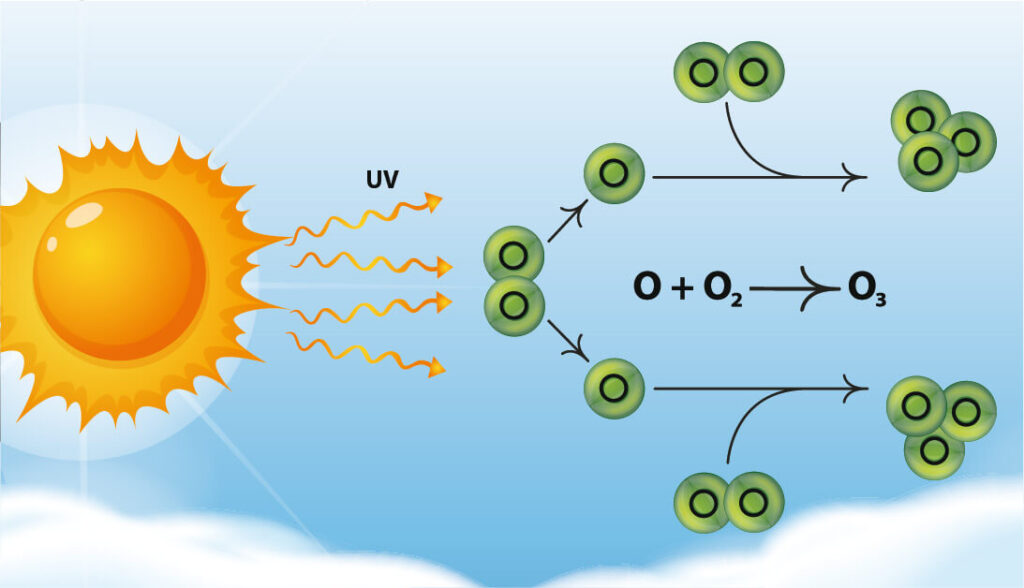
Because in both processes energy is added to oxygen molecules, they split into separate oxygen (o) atoms that connect with other oxygen (o2) molecules to produce ozone (o3). However, it is worth remembering that ozone is converted to oxygen relatively quickly and thus cannot be stored and delivered in a tank or cylinder. However, ozone can be produced at the disinfection site and a special device is used for this, the so-called ozone generator. The gas produced is as effective as from nature, provided the concentration is carefully controlled.
Ozone treatments is a very effective and ecological method of room disinfection, which among other things removes unpleasant odors, viruses, bacteria.
For most of us, the ozone is mainly associated with the ozone hole or the effect of fresh air after a storm, with a characteristic odor. Still, it is worth knowing that it is also used for disinfecting different types of usage areas, hotels, houses, offices, etc. It is one of the strongest and most effective disinfectants, more effective than conventional disinfectants. These properties have been known for many years, but have only recently been introduced for regular use in industry and economy.
The effect of ozone actually consists of rapid oxidation. The ozone encounters various pollutants in the air and chemically reacts with them, causing oxidation. The third oxygen atom in its molecule makes ozone very reactive (chemically active). It reacts very easily with polluting molecules such as odors, bacteria, viruses, mites, allergens or fungi. It breaks them down into less complex and usually less harmful particles. The remaining ozone automatically decomposes back to oxygen, which makes it very environmentally friendly.
Cleaning rooms with ozone is much more effective than traditionally with chemicals. In gas form it namely reaches the most inaccessible places that cannot be disinfected in any other way.
There is a soft luminosity to your writing, revealing meaning gradually. Each phrase invites careful observation, reflective consideration, and a meditative engagement with the text.